
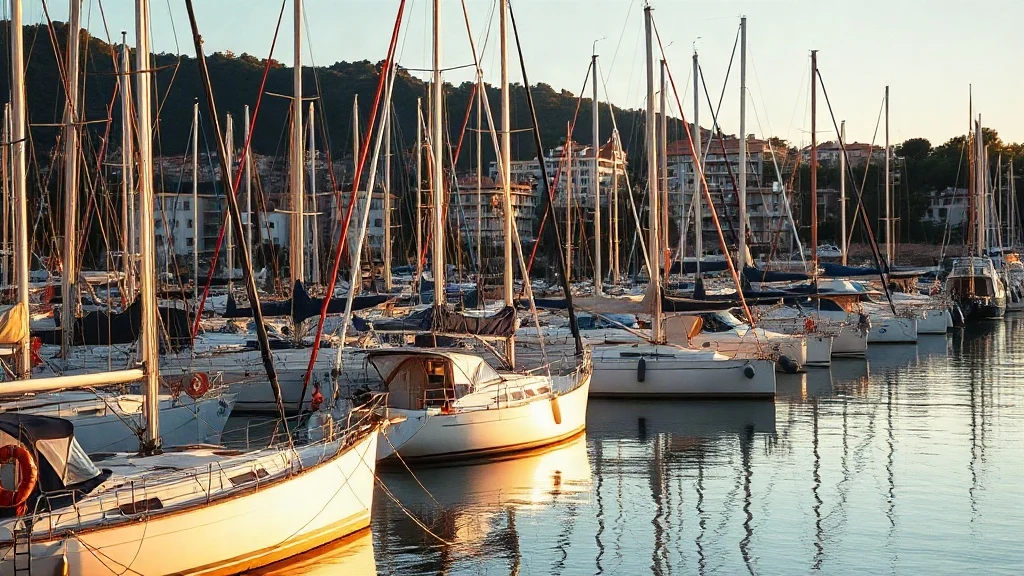
A charter company in Mallorca, whether it runs sailing yachts in Palma, motorboats in Port d'Alcúdia or catamaran excursions from Port d'Andratx, has a business with brutal seasonality and an administrative load that grows with every booking: quote, availability, contract, deposit, skipper, crew list, departure checklist, and finally the review. Automating quotes, contracts and check-in for yacht charter and marine businesses in Mallorca means that all of that paperwork happens on its own between the moment a customer writes and the moment they cast off, without the person in the office spending high season copying data from an email into a PDF.
A quote in minutes, not hours
Most enquiries arrive by email, WhatsApp or a web form, many in English, German or French, and almost all ask the same thing: which boat, which dates, how many people, with or without skipper, price. Today someone reads the message, checks the calendar, works out the rate by season, extras and days, and writes the reply. If there are twenty enquiries on Monday morning, the last ones get answered on Tuesday.
An automated workflow does this in minutes:
- It reads the enquiry (email, WhatsApp Business API or form) and extracts dates, number of people, type of vessel and extras.
- It checks the real availability calendar.
- It applies the rate table by season, days and extras (skipper, fuel, final cleaning, snorkelling equipment, catering).
- It generates the quote as a PDF with the company's logo, in the customer's language, and sends it with a link to book.
- It logs the enquiry in the CRM or the spreadsheet the company uses, with the status "quote sent".
If the enquiry has anything out of the ordinary (a group of thirty, a route to Menorca, a wedding), the workflow flags it and passes it to a person rather than inventing a price.
An availability calendar that does not lie
The classic problem in charter is the double booking: the boat shows as free on the website, an agent blocks it over the phone, and a third customer books through a portal. A single availability calendar, fed by every channel, prevents this. It can live in Google Workspace or Microsoft 365, or in the fleet management software you already use, and the portals and the website read from there.
Every confirmed booking blocks the boat, the cleaning days between departures and, where applicable, the assigned skipper. The automated quote only offers what is genuinely free.
Contract and deposit without chasing
When the customer accepts the quote, the phase that takes up the most office time begins. Automated, it works like this:
- The charter contract is generated with the details already collected: customer, vessel, dates, price, cancellation terms, security deposit.
- The customer receives it for electronic signature from their phone.
- The payment link for the booking deposit is issued, and later for the balance and the security deposit, on the dates set by the company's policy.
- Each payment received updates the booking status. If a payment does not arrive on time, a reminder goes to the customer and an alert to the office.
- Signed documents and payment receipts are filed in the booking's folder.
The crew list, which has to be submitted under the regulations applicable to each type of charter, is collected with a form the customer fills in calmly before arriving: names, identity documents and, where relevant, the boating qualification of whoever will be skippering. Personal data is stored on servers within the European Union and deleted after the period the company sets.
Skipper and crew assignment
For companies offering skippered charter, working out who goes out on which boat each day is a small puzzle: availability, the customer's languages, the qualification required for that length of vessel, rest between trips. A workflow that holds the skippers' calendar and the company's rules can propose the assignment when the booking is confirmed and notify the skipper by WhatsApp with the date, the boat, the customer, the number of people and any notes (a birthday on board, a customer who gets seasick).
If the skipper does not confirm within a set time, the office is alerted to resolve it by hand. The system proposes; the person decides in the unusual cases.
Pre-departure checklist, check-in and review
Two days before departure, the customer receives a message with the practical details: where the pontoon is, what time to arrive, what to bring, what not to bring, fuel policy, an indicative weather forecast and an emergency contact. This message alone prevents half of the calls the day before.
For the team, the departure checklist (safety check, levels, inventory, photos of the boat's condition) is done from the phone and logged with time and photos. On return, the same checklist serves for check-out, and the before-and-after photos are the basis for returning the deposit, or withholding it with justification, without arguments.
The day after the trip, when the customer still has the photos on their phone and the memory is fresh, they receive a brief thank-you message with a link to leave a review on Google or on the portal they booked through. If an incident was logged at check-out, the message is not sent automatically and a person reviews it first. This detail matters: asking someone who had a problem for a review before resolving it is a bad idea.
What it costs and which tools it uses
We build with what the company already uses: its email in Google Workspace or Microsoft 365, WhatsApp Business API, Holded or another invoicing tool, fleet management software if it has one, and a bespoke automation as the layer that connects everything, hosted in the European Union. An automation of the scope described in each section sits within our published range of €3,000 to €6,000. We always start with an assessment at a fixed €1,500, in which we measure how many enquiries are answered late, how many hours go into contracts and payment collection, and what is worth automating first before next season.
Frequently asked questions
Does it work with bookings that come in through charter portals?
Yes. The portals notify each booking by email or API, and the workflow brings them into the same calendar and the same contract and check-in process as direct bookings. What matters is that there is a single calendar, so that the availability the portals see is the real one.
What happens with a customer who asks for something the system does not understand?
It is passed to a person with the original message and whatever the system managed to extract. The workflow is designed to reply quickly to the routine (dates, boat, people, price) and to invent nothing for the unusual. A wedding at sea or a corporate group is still handled by the team.
Can we set it up before next season?
That is the usual time. Between November and March there is time to carry out the assessment, build the first automation and test it with real pre-season bookings. What we do not recommend is starting in June with the office already overwhelmed.
If in your charter company quotes get answered the next day and contracts are chased by hand, the starting point is to measure what that costs each season. Request an assessment
We implement it for you
We work at the leading edge of artificial intelligence and agents: we build on the most advanced agent platforms of the moment and we do it at your business, in Mallorca, with published prices and a person from your team approving anything that goes out. We start with an initial assessment and a written plan.